
Published 15 September 2026
.jpg)
If you are going to see humpback whales in Samaná Bay for the first time, this guide tells you what you will really see, what you will not, how close the boat can get, and how to handle seasickness, children and the camera. The season is short, 15 January to 31 March, and knowing what to expect is most of the difference between a good day and a disappointing one.
What you will actually see
The first thing you almost always see is the blow: the column of vapour when the whale surfaces to breathe. Wikipedia describes it as a cloud of up to three metres. Then the back. And as the animal starts to dive, often the tail, which a humpback lifts out of the water at the start of each dive.
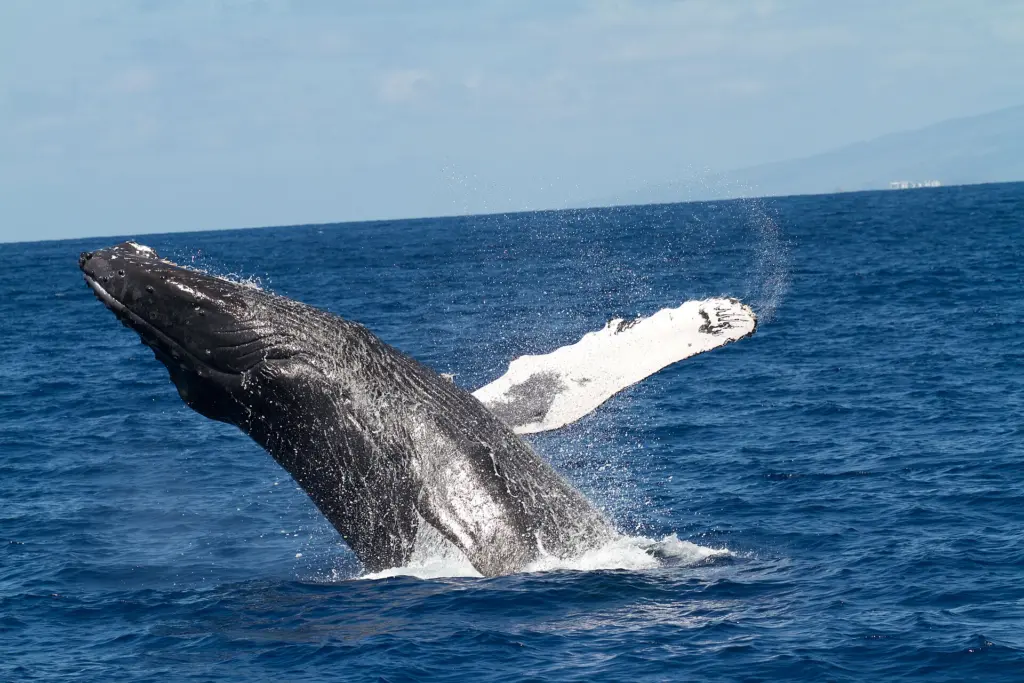
With luck you see a full breach, or the animal slapping the water with its pectoral fins. And in season you see mothers with a calf alongside, which is the reason the whales come to this bay at all: to mate and to calve.
For a sense of scale: an adult measures between 12 and 16 metres and weighs around 36 tonnes. A calf is born at four to four and a half metres and around 700 kilos. What shows above the water is a small part of all that, and it still stops you.
What you will not see
- Whales the whole time. A whale watching trip is time sailing and time waiting. In winter, according to Wikipedia, dives last ten to fifteen minutes, with records of over thirty. Between one blow and the next, you wait.
- A whale next to the boat. How close a boat may get is limited by law. You will see them, at the distance the rules allow, not the distance you might like.
- A guaranteed sighting. These are wild animals in open water. In the heart of January and February not seeing them is the exception, but no honest trip guarantees it.
- Swimming with them. It is not allowed. The bay is part of the Bancos de La Plata y La Navidad Marine Mammal Sanctuary.
If you go expecting a documentary, you will come back disappointed. If you go expecting to be on the sea where they are born, and to see whatever they choose to show that day, you will come back happy. The difference is the expectation, not the trip.
The distance is set by law, not by the captain
Samaná Bay is part of the Bancos de La Plata y La Navidad Marine Mammal Sanctuary, created in 1986. Wikipedia estimates that 85 percent of the humpbacks in the North Atlantic were born in that sanctuary. Whale watching is regulated by the Dominican Ministry of Environment, which each season issues the environmental authorisations for the boats allowed to go out and watch; for the 2026 season it announced 46.
These are the rules the Ministry goes over with captains every season:
- Three boats at most watching the same group, whatever their size, in order of arrival.
- 30 minutes at most with a group of whales, and 20 minutes with a mother and calf.
- Boats waiting their turn stay 250 metres back, behind the ones watching, in groups of three.
- Engines are never switched off next to the animals, for safety.
- Watching takes place from 8:00 in the morning to 4:00 in the afternoon.
We go out with that permit and under those rules. If you are comparing operators, whether they have the authorisation is the first thing worth asking.
Seasickness: the thing that ruins more trips than the weather
It is a boat trip with waiting time, and waiting in open water is when seasickness shows up. If you are prone to it, take something before boarding, not once you feel it. Ask at the pharmacy what to take; we do not prescribe anything.
Three things that help without medication: eat something light before you go, not nothing and not a feast; keep your eyes on the horizon rather than on your phone while the boat is moving; and stay in the fresh air rather than in any enclosed spot. And if you are travelling with children, seasickness counts double: what you give a child is a question for their paediatrician, not for us.
Going with children
Children do well on this trip when they know what is coming: waiting, then a blow, then waiting again. Tell them the whale decides, not the boat. The ones who arrive expecting a show tend to get bored between sightings; the ones who arrive as spotters tend to be the first to see the blow.
Practical points: sun protection and a hat for everyone, a light layer against the wind, water, and something to do while you wait. Tell us the children’s ages on WhatsApp when you book and we will give you an honest answer about whether the trip suits them.
Photos: what works and what does not
A phone works for the blow and for the general scene, and it will not work for the whale itself, because the boat keeps its distance by law. A camera or phone with real zoom makes the difference. And the photo of the day is often not the whale: it is the people on the boat the moment the tail comes up.
Two habits: keep the camera ready between blows rather than putting it away, because the tail comes without warning; and put it down at least once. Being there is the point, and the screen is a poor substitute.
Planning ahead
The season runs from 15 January to 31 March, and there are no trips outside those dates: not for lack of organising, but because the whales are not in the bay. Within the season, the middle weeks tend to be the busiest. If you are planning months ahead, write to us anyway; knowing your group size and which week you want lets us hold it.
Whale watching leaves from the same pier as our other trips, in Santa Bárbara de Samaná. If you are combining it with a day on the island, the other trip from that pier is Cayo Levantado, and why it is called Bacardi Island explains the name people ask about. How to reach the pier from the airports and the main towns is in how to get to Samaná.
How to book the trip
Everything else, including what is included and what to bring, is on the page for whale watching in Samaná. Message us on WhatsApp with your date and how many people, and we reply with availability, price and the details of the trip. Our other departures from the same pier are on our boat trips in Samaná.
Ask for price and availability
Common questions
When is the whale watching season in Samaná?
From 15 January to 31 March. Outside those dates there are no trips, because the whales are not in the bay. The middle weeks of the season tend to be the busiest.
Are you guaranteed to see whales?
No honest trip guarantees it: they are wild animals in open water. In the heart of January and February not seeing them is the exception, but it can happen.
How close does the boat get to the whales?
As close as the sanctuary rules allow and no closer. The distance is set by law, along with the time spent with each group, and we sail under that permit and those rules.
Can you swim with the whales?
No. It is not permitted inside the Bancos de La Plata y La Navidad Marine Mammal Sanctuary, of which Samaná Bay is part.
Is the trip suitable for children?
Often yes, as long as they know there is waiting involved and the sea does not upset them. Tell us their ages on WhatsApp when you book and we will give you an honest answer.
Tell us your date and how many people are coming, and we reply with availability, price and package options.
Message us on WhatsApp